

Mfortune casino Plinko game
Introduction
When I look at Mfortune casino Plinko, I see a format that appears almost too simple to deserve serious attention. A ball drops from the top of a pegboard, bounces left and right, and eventually lands in a slot with a multiplier. That is the entire visual idea. Yet in practice, Plinko creates a very specific kind of tension that many traditional online slots do not replicate. It is quick, transparent on the surface, and deceptively sharp in the way it handles variance.
For UK players browsing Mfortune casino, Plinko stands out because it removes the usual slot framing of paylines, reels, symbols, scatters and Mfortune Casino bonus page for detailed casino comparison rounds. Instead, it turns the session into a sequence of compact decisions: bet size, number of rows, and usually a chosen risk level. The result is a casino game that feels more direct than a slot, but not as strategically involved as blackjack or roulette.
That directness is exactly why the game deserves a closer look. Plinko is easy to start, but not always easy to read correctly. Many players assume that because the interface is minimal, the logic must also be simple. My experience says the opposite. The screen may look clean, but the real session profile can change dramatically depending on the risk setting and board layout. Before launching Plinko at M fortune casino, it helps to understand what the game actually offers, where the pressure points are, and what kind of player tends to enjoy it over time.
What Plinko is and why it draws so much attention
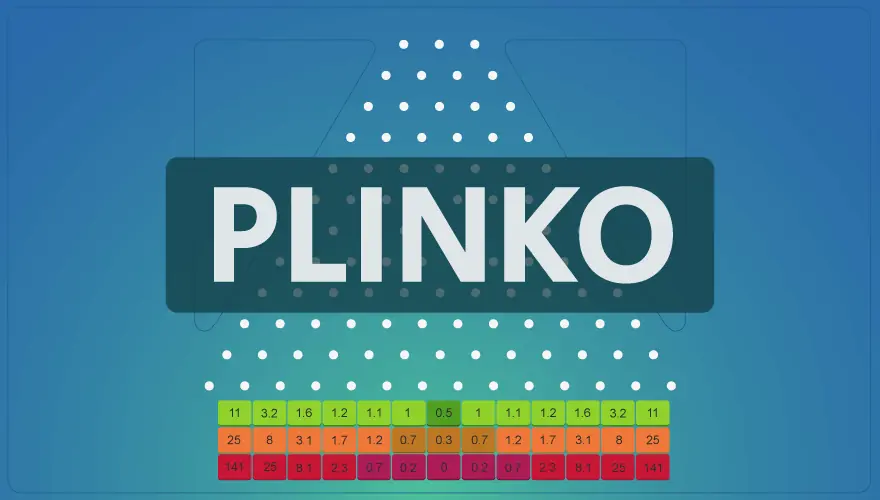
Plinko is a chance-based casino game built around a vertical board filled with pegs. The player chooses a stake and drops a ball from the top. As the ball hits each peg, it deflects left or right until it reaches one of the payout slots at the bottom. Each slot carries a multiplier. Low multipliers usually sit near the centre, while the highest returns tend to appear at the outer edges.
The reason this format attracts attention is not just visual simplicity. It is the combination of instant resolution and visible randomness. In a slot, the random number generator works behind a familiar reel animation. In Plinko, the randomness is staged in a way the player can watch unfold step by step. That creates an unusual psychological effect: even though the outcome is still random, the path feels personal. Players often remember near-edge bounces more vividly than a standard losing spin on a slot.
There is another reason Plinko has become so noticeable on modern gambling platforms. It compresses the emotional arc of a session. You do not wait for a feature round to unlock. You do not track symbol combinations. Every ball drop is its own event. That makes the game especially visible in short sessions, on mobile screens, and in streams or shared gameplay clips. But visibility should not be confused with simplicity of outcome. A game can be easy to understand visually and still produce a demanding bankroll experience.
One thing I find important here: Plinko often feels fairer to players not because it is mathematically softer, but because its structure is easier to observe. That distinction matters. Transparency of presentation is not the same as lower danger.
How the Plinko system actually works in play
At a practical level, the Plinko mechanic is built on repeated binary movement. Every time the ball strikes a peg, it shifts to one side. Over many rows, those small deviations create a distribution pattern. Most outcomes naturally cluster around the middle of the board, while the more extreme landing zones are harder to hit. This is why the largest multipliers are usually placed at the far ends: they are tied to less frequent paths.
In many versions of Mfortune casino Plinko, the player can influence the session setup before dropping the ball. The common adjustable elements are:
- Stake size — determines the base value of each drop.
- Risk level — usually low, medium, or high, changing how the multiplier map is distributed.
- Board depth or row count — in some versions, more rows increase the number of possible paths and alter the spread of outcomes.
These settings matter more than many players expect. A low-risk configuration usually offers more frequent modest returns and a narrower spread between common outcomes and top-end multipliers. A high-risk setup does the opposite: it shifts more weight toward low-value results while reserving a tiny number of slots for very large multipliers. The game still looks the same, but the session rhythm changes sharply.
That is one of the defining traits of Plinko. The interface barely changes, yet the experience can move from “steady and repetitive” to “dry and explosive” just by toggling a risk option. In slots, volatility is often hidden behind a paytable and RTP sheet. In Plinko, the change is felt almost immediately in the landing pattern and return spread.
| Setting | What changes | What it means in practice |
|---|---|---|
| Low risk | More balanced multipliers, fewer extremes | More stable short sessions, but limited upside |
| Medium risk | Wider payout spread | Mix of routine results and occasional stronger hits |
| High risk | Heavy concentration of poor outcomes with rare top multipliers | Long dry spells are more likely; bankroll swings become sharper |
| More rows | Longer path to the bottom, more route combinations | Usually increases drama and can stretch the distribution profile |
From a design perspective, Plinko is elegant because every choice is easy to explain. From a player perspective, that elegance can be misleading. The game does not ask you to learn much, but it can punish poor session planning very quickly.
Why the pace feels so different from a slot session
Plinko has a very distinct tempo. The action resolves fast, but not invisibly. You watch the ball travel, react to each bounce, and anticipate the final slot. That tiny journey is enough to create suspense, even though the round lasts only a moment. In practical terms, this gives Plinko a rhythm somewhere between a slot spin and a simple instant-win format.
The pace also depends on how the player uses it. Some treat each drop as a standalone event and play slowly. Others fire off repeated balls in quick succession, especially when auto-play or rapid input is available. This is where discipline becomes important. Because each round is short and visually clean, it is easy to underestimate how many bets can be placed in a few minutes.
I often describe Plinko as a game that feels lighter than it really is. It does not look aggressive. It does not bombard the player with symbols and bonus prompts. But the speed of repetition can be significant, and that has direct consequences for bankroll management. The quieter the interface, the easier it is to miss the spending pace.
A memorable detail of Plinko is that suspense arrives before the result, not after it. In slots, the emotional spike often comes from a reveal on the reels. In Plinko, the reveal is stretched across the descent. That changes the texture of the session. The player is not just waiting for a number; the player is tracking a path. It is a small difference, but it explains why some people find the game strangely absorbing despite its stripped-down design.
Understanding probability, variance and session reality
Before playing Plinko at Mfortune casino, the most useful thing to understand is that not all random-looking outcomes are equally likely. The centre zones of the board are generally easier to reach because there are more path combinations leading there. The edges, where the most attractive multipliers often sit, are statistically less common. This is not a flaw in the game. It is the core of the model.
That means players should avoid a common mistake: assuming that because the high multiplier is visible on the board, it is remotely “due” after a string of ordinary results. Plinko does not build toward a jackpot state in the way some players emotionally interpret progressive tension. Each drop remains an independent event governed by the game’s internal random logic.
In practical terms, the session outcome is shaped by three linked factors:
- Distribution of multipliers — where the stronger returns sit and how many low-value slots dominate the board.
- Chosen risk profile — whether the board is tuned toward steadier small returns or rare large spikes.
- Number of rounds played — short sessions can feel wildly uneven because variance has little time to smooth out.
This is where Plinko becomes more serious than it first appears. If a player chooses a high-risk layout and expects regular medium returns, disappointment comes quickly. If a player uses low risk and hopes for dramatic upside, the session may feel flat. The game only makes sense when expectation matches configuration.
Another useful observation: Plinko teaches variance more honestly than many slots do. On a slot, players sometimes blame symbols, bonus timing or “cold reels.” In Plinko, the distribution is easier to grasp. You can see that the central lanes catch most traffic. That visibility does not reduce randomness, but it can help players think more clearly about what the game is built to do.
How risky is Plinko and who is it really suited to
Plinko can range from moderately manageable to highly punishing, depending on settings. Calling it simply “high volatility” is too broad to be useful. The more accurate view is that Plinko is a configurable variance game. The player often chooses how sharp the session profile becomes. Players who value quick withdrawals will find real timings in detailed Mfortune Casino bingo information for active casino players.
For cautious players, low-risk Plinko may work as a short-form casino option with straightforward feedback. You immediately see what your stake did, and there is less mystery around how outcomes are distributed. For players who actively chase large multipliers, high-risk Plinko can be appealing, but only if they accept that long sequences of weak returns are not unusual. That trade-off is not theoretical. It defines the experience.
In my view, Plinko suits players who enjoy:
- fast rounds with minimal setup,
- clear visual randomness rather than hidden reel logic,
- adjustable session intensity,
- short bursts of play instead of long feature-driven grinds.
It may be less suitable for players who prefer:
- narrative slot themes and bonus rounds,
- deeper decision-making like blackjack strategy,
- predictable pacing over long sessions,
- games where entertainment comes from evolving features rather than repeated core actions.
If I had to put it plainly, Plinko is often better for players who enjoy the shape of randomness itself. If someone needs variety of symbols, stages, free spins guide or layered progression, the game can start to feel one-note surprisingly quickly.
What players should know about rhythm, outcomes and expectation
One of the biggest practical points with M fortune casino Plinko is that the game can create misleading emotional signals. A near miss toward a high multiplier feels meaningful, but mathematically it is still just a non-winning route or a lower return route. The board makes these moments visible, and visibility intensifies memory. Players tend to remember the ball that nearly reached the edge more than ten routine centre landings.
This matters because expectation can drift during a session. A player may start believing the board is “leaning” toward one side, or that a top multiplier is close because several drops looked promising. In reality, Plinko remains a random process. The path animation is engaging, but it should not be confused with a pattern you can exploit.
There is also a bankroll point worth stressing. Because rounds are fast and often feel harmless, players may increase stakes too quickly after a few decent returns. That can become expensive, especially on higher-risk settings where dry sequences are part of the structure. A calm-looking game can produce rough swings if the stake level is not aligned with the chosen board profile.
My practical advice is simple: decide before you start what kind of session you want. If the goal is longer play with less pressure, use a lower-risk setup and modest stake. If the goal is to take a few shots at larger multipliers, treat it as a high-variance session from the outset and budget for weaker stretches. Plinko is much easier to enjoy when the session plan is clear before the first drop.
How Plinko differs from slots and other casino games
The easiest comparison is with classic online slots, but the differences are more important than the similarities. Both are chance-led and both can be played quickly. Beyond that, the player experience separates quite sharply.
| Game type | Main engagement driver | Player experience |
|---|---|---|
| Plinko | Path-based suspense and multiplier landing | Fast, direct, visually transparent, repetitive by design |
| Classic slots | Reel outcomes, symbols, bonus triggers | Theme-led, feature-led, often more varied over time |
| Roulette | Single-result betting structure | Cleaner probability framing, less animated suspense |
| Blackjack | Decision-making and house-edge management | More strategic, slower mentally, less passive |
Compared with slots, Plinko removes symbol complexity and feature anticipation. That makes it easier to read but also less layered. Compared with roulette, it adds visual drama to a probability-driven result. Compared with blackjack, it offers almost no strategic depth once the board is configured.
This is why Plinko occupies a useful middle ground. It is simpler than most slot systems, more animated than a straight table bet, and more configurable than many instant formats. But that middle ground is also its limit. If a player wants rich content and evolving gameplay, Plinko may feel too narrow. If a player wants full strategic agency, it will feel too passive.
Practical strengths and weak points of the format
Plinko has several genuine strengths, and they are not just cosmetic. First, the game is easy to understand without being completely trivial. A new player can grasp the rules in seconds. Second, the risk setting usually gives immediate control over session character. Third, the visual journey of the ball creates suspense in a way that is unusually clean and efficient.
That said, the same qualities produce its weak points. Simplicity can become repetition. Fast rounds can encourage overplay. Visible top multipliers can distort expectation, especially for players who start chasing rare outcomes after a few near misses.
I would summarise the practical balance like this:
- Strength: low barrier to entry and very clear core logic.
- Strength: adjustable intensity through risk selection.
- Strength: strong short-session appeal, especially on mobile.
- Limitation: limited gameplay variety over longer sessions.
- Limitation: high-risk setups can burn through a balance quickly.
- Limitation: the visual path may encourage emotional reading of random events.
One of the more interesting contradictions of Plinko is that it feels both honest and seductive. Honest, because you can see the structure. Seductive, because the visible path makes every bounce feel like it might mean something. That tension is part of the game’s appeal, but it is also where players need the most self-control.
What to check before launching Mfortune casino Plinko
Before starting a real-money session on Mfortune casino, I would focus on a few very practical checks rather than broad casino-side distractions. The first is the risk setting. Do not treat low, medium and high as cosmetic labels. They define the shape of the session.
The second is the multiplier table. Look at where the stronger returns sit and how many low-end outcomes dominate the board. This tells you more about the likely session feel than any vague promise of excitement. The third is the stake level relative to speed. Because drops resolve quickly, a stake that seems harmless on paper may add up faster than expected.
If a demo mode is available, it is worth using briefly. Not because demo results predict real-money results, but because they help the player understand pacing, board behaviour and emotional response to the chosen setup. Some players discover quickly that they enjoy low-risk repetition. Others realise they only like the game when chasing large multipliers, which is a much more demanding style.
I would also suggest asking one simple question before playing: am I here for steady entertainment or for occasional high-end spikes? Plinko can serve either motive, but usually not both at once. Once that answer is clear, the right configuration becomes easier to choose.
Final verdict
Mfortune casino Plinko offers a stripped-back gambling experience built around visibility, pace and configurable variance. What it really gives the player is not depth in the traditional slot sense, but clarity of structure. You choose a stake, choose a risk profile, drop the ball and watch randomness take shape in real time.
Its strongest points are easy to identify. The game is accessible, quick to read, and capable of creating genuine suspense without clutter. It also gives players more direct control over session style than many standard slots. That alone makes it worth attention, especially for people who prefer clean interfaces and short, focused rounds.
The caution lies in the same area. Plinko can look gentler than it is. Higher-risk settings can produce sharp swings, and the visible path of the ball can tempt players into reading patterns that are not really there. It is also not a format for everyone. Players who want layered bonus features, thematic immersion or strategic decision-making may find it too narrow after the novelty fades.
My conclusion is straightforward: Plinko is worth trying if you want a fast, transparent casino game where the tension comes from probability unfolding in front of you. It is less suitable if you expect progression, variety or control beyond the initial setup. In other words, Plinko does one thing very clearly. For the right player, that clarity is the appeal. For the wrong one, it becomes the reason to move on.
FAQ
How does Plinko ball drop work step by step?
A stake is placed, the ball is launched from the top, and it bounces down across pegs into a distribution of slots. Each landing slot corresponds to a multiplier shown for that outcome.
Where can the risk level and multiplier ranges be seen before launching a ball?
The Plinko interface displays the current multiplier scale and the risk indicators for the selected mode. Those values are tied to the exact real-money or demo configuration currently open, so checking the scale right before launch helps avoid surprises.
Can Plinko be played in demo mode and then switched to real-money play?
The game supports a demo mode for practice, and a real-money mode for betting with funds. Switching keeps the rules consistent, but the stakes and balance impact differ. Before starting real-money play, check that the active mode label is set correctly.